
Particle-size and distribution directly govern surface area, packing, flowability and interparticle contact, thereby shaping dissolution rates, reaction kinetics and mechanical performance. Smaller medians raise surface area and accelerate kinetics; broad spans change packing density Particle Size Distribution, segregation risk and compaction behavior. Manufacturing reproducibility depends on controlled D10/D50/D90, span and shape metrics plus validated measurement methods. Process controls and DoE reduce variability and scale-up risk. Continue for specific analytical techniques, control strategies and reporting practices that quantify these effects.

Why Particle Size Matters in Formulation and Manufacturing
Particle size critically influences formulation behavior and manufacturing performance by directly altering surface area-to-volume ratios, dissolution kinetics, blend uniformity, flowability, compaction properties, and segregation tendencies. Analysts quantify particle distributions to predict mixing homogeneity and minimize batch variance; increased surface area elevates interfacial energy, changing adhesive forces and powder cohesion. Controlled size distributions reduce hopper blockages, improve die filling consistency Lab Alliance, and lower rejection rates. Metrics such as span, D10/D50/D90, and specific surface area guide process settings. Empirical targets derived from pilot runs enable reproducible scale-up. Decision-making prioritizes measurable parameters to maintain specification limits and optimize production throughput.
Effects of Particle Size on Chemical Reactivity and Dissolution
Across a range of solid materials, particle size exerts a direct, quantifiable influence on chemical reactivity and dissolution rates through changes in specific surface area, surface energy, and diffusion path lengths. Smaller particles increase surface area per unit mass, accelerating reaction kinetics and elevating apparent rate constants in heterogeneous and solution-phase reactions. Measured dissolution profiles correlate inversely with median particle diameter, with controlled milling reducing t50 and t90 values predictably. Surface energy variations alter activation barriers and propensity for surface-mediated transformations. For formulation control, targeted particle-size specifications enable reproducible reactivity, informed kinetic modeling, and tighter process windows for desired dissolution behavior.
Impact of Size Distribution on Flow, Packing, and Mechanical Properties
While median particle size governs surface-driven reactivity and dissolution kinetics, the breadth and shape of the particle-size distribution exert disproportionate influence on bulk handling, packing density, and mechanical response. Distribution tails dictate packing efficiency, interparticle contact, load transfer, and consolidation behavior; wide distributions reduce voidage but increase risk of powder segregation under vibration. Controlled granulometry minimizes variability in tablet friability and compaction force requirements. Quantitative metrics (span, skewness) correlate with flowability indexes and tensile strength reproducibly. The table highlights trade-offs for formulation control:
| Parameter | Effect |
|---|---|
| Narrow span | Predictable flow |
| Wide span | Higher packing |
| Positive skew | Segregation risk |
| Negative skew | Improved strength |
Analytical Techniques for Measuring Particle Size and Shape
Several complementary measurement approaches are routinely employed to characterize particle size and shape, each providing distinct metrics and limitations that must be matched to the sample and the intended use. Quantitative methods include laser diffraction for rapid volume-weighted size distributions, offering high throughput and reproducibility but limited shape sensitivity. Image analysis supplies particle-by-particle morphology, resolving aspect ratio, circularity, and agglomerates, though throughput and statistical sampling require control. Complementary techniques — sieving, dynamic light scattering, and microscopy — contribute resolution at different scales. Instrument selection should be justified by detection range, resolution, sample dispersion, and required uncertainty for decision-making.
Strategies for Controlling Particle Size During Production
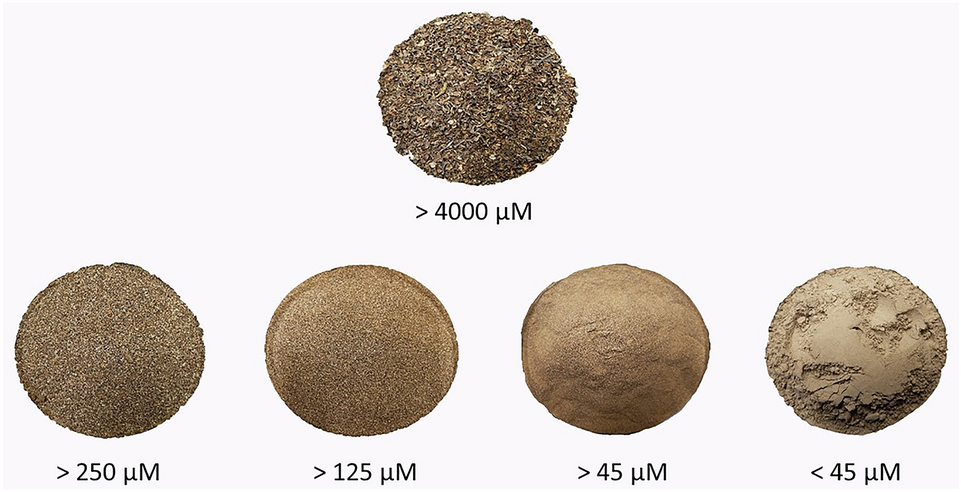
Measurement methods define not only the metrics used to describe particulate systems but also the process parameters that must be controlled to achieve those metrics; consequently, production strategies are formulated with explicit targets for size distribution moments, shape descriptors, and allowable variance. Control measures prioritize feedstock characterization, milling energy profiles, nucleation and growth kinetics, and real-time monitoring. Process optimization employs design of experiments and feedback loops to stabilize median diameter and span. Solvent selection influences solubility, supersaturation and crystal habit, thereby reducing downstream classification load. Scale-up integrates similarity criteria and control banding to maintain validated particle characteristics across production batches.
Best Practices for Reporting Particle Size in Research and Quality Control
In reporting particle size for research or quality control, authors and technicians should present clear, quantitative descriptors—such as D10/D50/D90, geometric and aerodynamic diameters, span, and shape factors—alongside the measurement technique, instrument settings, sample preparation procedures, and statistical treatment used to derive them. Standardized reporting and statistical transparency enable reproducibility and defensible specifications. Recommendations prioritize control and traceability:
- Specify method, model, calibration, and detection limits.
- Report sample handling, dispersion protocol, and replicate count.
- Provide raw distributions, summary metrics, and uncertainty estimates.
- Declare data processing, exclusion criteria, and software versions.
Consistent adherence reduces variability and supports decision-making.
Conclusion
Particle size critically influences formulation performance, processability, and experimental validity; small-scale variations yield measurable changes in reactivity, dissolution kinetics, flowability, packing density, and mechanical strength. Quantitative control and reporting of size distribution, shape metrics, and measurement methodology are consequently essential to reproducibility and quality assurance. Implementing validated analytical techniques and robust production controls reduces variability and enables data-driven optimization, ensuring that particle characteristics consistently meet targeted specifications and support reliable research outcomes and product quality.